Saturday, December 2, 2017

event 2


Smash your insecurities
For this event nat, ash, and I went to the smash your insecurities even held by delta phi epsilon. (Gi's sorority) The idea of this event is for students to have the physical opportunity to face an insecurity that you are dealing and smash it till its gone. When I was participating one insecurity that I had in mind is my self esteem. I really struggle with bad self esteem and tend to beat myself up more when I feel like I'm wrong. One way the this actually helped me was actually recognizing my insecurity and what triggers it and ways that I can improve on it. Smashing the pumpkin was actually super fun and relieving. Everyone was laughing at each other so it was just a really nice community to be around. 

event 1

This semester one event I attended was the Advising meeting for YDEV. My intentions for this event was to come and help other students form their schedules and work myric and give them feedback and experiences on classes that I have taken in the past. When arriving at the meeting there were more seniors than those who needed help with their schedules so I tried to make myself as much useful as I could. But for me the advising for YDEV is one of the aspects that make this community so strong. The YDEV professors have constructed a plan of study that lays out all of the classes you have taken or the classes you need to take and when. This is so powerful for students because it sets us up for success instead of taking shots in the dark guessing what type of classes to take which eventually could make the student fall behind. I have loved the aspect of advising since I joined YDEV and it is so different coming from a teaching community where you are thrown at oasis who have no clue who you are and just take a wild guess on what will work for you the following semester. The Advising meeting to me displays the anchor of leading with because the plan of study sets us up for success. It provides the opportunity to visually see what is completed and what needs to be met.


Wednesday, November 15, 2017

Ideology


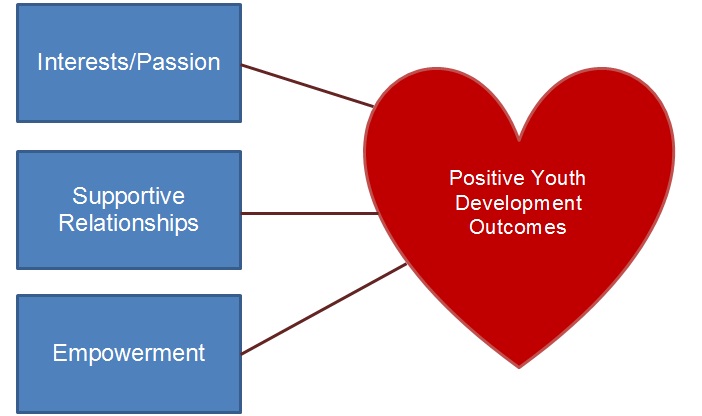
For my YDEV ideology I identified with positive Youth development with a close second to Risk and Resilience. I believe the values that I can identify with both is that support is such a huge factor in both ideologies. For positive we try to bring the support into our field to help our youth. Community factors rely heavily on both of these and how with risk and resilience this can influence no control over situations that lead to behaviors and for positive we take the community factors to build upon.

Wednesday, October 18, 2017

Injustice


A time in my life that I can reflect on where I felt an injustice was my junior year of high school. This was a point in my life where so many things where going on, so many emotions where flying around. I had found out a couple weeks before that I was pregnant so all eyes were on me at school and everyone had something to say about me. A teacher that I had really trusted and had established a trusting relationship with had wanted to meet with me in the school library during lunch. This was not weird for me because me and her have shared many moments like this before. I would tell her about issues I had at home which was frequent and the issues I had with my friends. I could trust her with my feelings and for her to give me some advice or just say things that made me feel better. On this day when she asked to meet with me she had me sit down and started talking about how her brother and sister in law adopted a baby and it was the best gift they could have received. She kept talking about how unstable of a household I live in and that this environment would not be healthy for my baby. As I sat there with tears rolling down my face she told me she knew why I was crying and it was because I knew that what she was saying was right. All these thoughts ran through my head as I second guessed myself and my abilities to actually be able to parent, as if I was not feeling defeated enough in the moment. Her words really impacted me and it forever changed the relationship I had with her. The trust was no longer there because when I thought she was listening instead she was judging. As I walk about from this moment in my life, what I took the most out of this was that this is not the type of relationship I would want to have with the youth in my life. I know she meant well but she did not really know as much as she thought she did. Rewinding, I wish I had stood up for myself more but now I think I have proved myself.
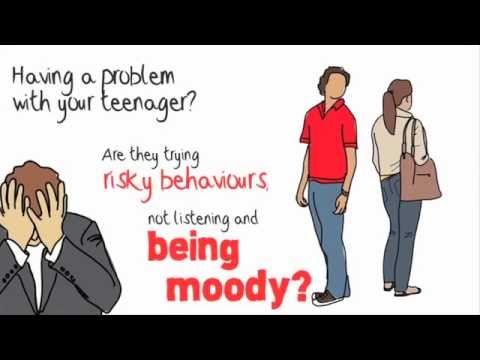
My observation of injustice I could connect to one of our previous readings about teenagers. The stereotypes that teenagers have on others, and also just stereotypes in general. This is an example of how society today views the capabilities of our youth.

Monday, October 2, 2017

Youth Work is care


The work of keeping “kids in mind,” remaining attuned to their needs and perceptions even whenthey’re not present, echoes one of Lynch’s (2007) core practices of “love labour:”

Care based on a love of humanity, rather than maternal instincts.

Caring labor and intentional linking of “self and community” reflects a care philosophy rooted simultaneously in individual. 

Caring for relationships is a broader conception of community and justice.
↠The way Sarahs hair is cut is to represent gay community and they way she dresses but also opens up about herself to her students that provide them a perspective of the LGBTQ community that they may not receive in their home environment.

Care beyond the classroom. Michelle, buying weekly snacks is more than the physical effort, cash expenditure, or time it takes before school. 

↠ It is very much the invisible work of “feeding the family” that MarjorieDeVault (1994) describes—the planning, shopping, preparing of meals that go into raising children up. It is the effort of making school a “safe space” and a “second home,” effort comprised of all the countless large and tiny, often invisible, acts that mothers and motherers do to make a space feel cozy, predictable, provided-for, safe.

Care in terms of race, culture, social identity and survival.
 ↠ I cannot be a teacher without exposing who I am.” She connects cleaning to deeply held practices and roots as a Latina woman. She says that sometimes she “want(s) to break that stereotype of the female teacher—nurturing, keeping everything nice and clean,” but she cannot. Cleaning is part of where she comes from as a woman, a mother, Puertorriqueña, and as someone who also came up in neighborhoods where public investment in cleanliness and community were lacking.
Care within self
 ↠ Eli demonstrated his caring approach in work of seeing himself “through the eyes of students,” in his commitment to breaking through with hard-to-reach youth, in the great care he takes with his own practice and with supporting and mentoring other teachers.

It is physical, emotional, intellectual. It is compassion, presence, and curious care.

Tuesday, September 26, 2017

My Youth Development Story

Before declaring my major as Youth Development the paths I’ve taken have been difficult but I would not be where I am without those experiences. Growing up I have always felt led to work with you but my journey is finding where I fit in. In high school when I became pregnant I was so judged by others I lost sight in who I am and conformed to who people were telling me I was. Juggling the identities of teen, student, mom, and part time employee became my full time responsibility. But I knew I had to do what I have to in order to provide the best things for my son. Going through this it was drilled into me that I need to provide a life for my son that he deserves because “ he did not choose to be brought into this life.” I was told I would not be able to do this unless I went to school, got a degree, and got a job that would pay well. So I strived for this. I thought I belonged in Early Childhood Education but I soon realized that I did not want to be a teacher in a classroom. Working with the education system is so black and white and I want to color outside the lines. This brought me to YDEV where I experienced a community like no other. I found my voice and passion and the knowledge that opened my eyes into a whole different world outside of what I have known and my thirst to learn more has grown. To get where I am today I would not have been able to do without my support system. My family watched my son while I attended school and while both myself and my now husband would work right after school in order to provide for our son. My family provided a roof over my head and tried their best to make sure I was not struggling. But I was still responsible for my son. I provided his needs and cared for him since he was born. But because of my experiences and support system it has made me the person I am today and I have really wanted to give back. I am so fortunate that I was able to have the people in my life that I did when I needed the support. I would like to be that support to someone who is not as fortunate as I was. I want to be that friend that I did not have. I want to be that someone who I needed. I feel that Youth Development has led me to here and has given me the tools and opportunities to succeed.  

Leading With


Youth in Action describes leading with as giving and supporting the tools for youth to impact a change for them to live in a world that they want to live in. They lead through youth through different learning skills such as project based, service, adventure, and cooperative learning. These learning styles supports leadership skills, basic needs of our surrounding communities, healthy peer relationships, and the inspiration to reach beyond what society tells them they can do. They promote this by giving ALL youth a space to share their stories, practice leadership, and create change in their communities.

Wednesday, September 20, 2017

About Me


Play in Youth Work

An example of youth work that I have been involved in is speaking about my experience as a pregnant teen in two different high schools. One high school includes my own which I feel I can make real connections with the students in this environment because I was literally once sitting where they are. I bring a personal touch to a topic that parents and teachers feel the need to tip toe around because society has trained us to feel shameful about teenage pregnancy. In this space I advocate for all teens, pregnant, parenting, and adolescents learning about safe sex.

~~~> Also in this space, an aspect of play that I bring is a slideshow presentation to go along with a my personal story and also some interactive aspects with the students. As each year I improve my presentation I would like to include more interactive activities or something.


Other youth spaces that I have worked in include an inhome daycare setting with children ranging ages in infancy to school aged. Where I tried to incorporate play in whatever I did because I strongly agree with Piaget that playing IS learning.
~~~> My work with this population of youth has a much more descriptive aspects of play. I had to really take control of my setting in this position and basically come up with day to day activities for the kids. But with this I let the kids kind of lead with what directions they were interested in. So for an example of this was that it was hard to get a group of a variety of aged kids to sit down to listen to a story during reading time. For the kids to become more engaged and interested in following along with this activity I created felt pieces for specific key objects within the storyline.


Reading the text through a different lense to look a play has really made me rethink strategies and certain activities or even discussions or role modeling can be considered as play through the 6 P's.

Monday, September 11, 2017

Youth Stereotypes

Stereotypes of Youth 


Self-indulgent
Leslie Bogad discusses how Life Magazine read, adults assume youth to be selfish, and uninvested in more sophisticated concerns such as work, health, money.

Incomplete
"We come to know youth as incomplete, in-transition, finding themselves, hormone-driven, emotional, inexperienced, and always in opposition to the adults in their lives"
Mini versions of "us"

Discourses of adolescence development suggest that all young people must pass through stages en route to a more mature version of themselves. It is assumed that, what youth are what adults should of expect of them.


Reverend Erb to Ms. Steinberg is absurd about her "teaching a program that allows students to make decision." Steinberg goes on to state that adults don't like teenagers and assume them to be distrustful. Ms. Steinberg has devoted her career to teaching students motivating the young adults to become leaders, to be viewed as worthwhile, trustworthy, and brilliant.

Steinberg says adults fear youth from media hype. "Popular images of youth created a suspect society driven by desire and the ability to terrify adults." Then Leslie discusses that youth are understood as mysterious and puzzling to adults who would be shocked about their lives

Steinberg continues to discuss how over history conversations of youth reveal that they are a problem.

⇢⇢ Instead of defining youth as "mini us", we need to redefine youth as by seeing how youth define themselves. ⇠⇠

Thursday, September 7, 2017

Characteristics of a Youth Worker


      As told by Wood, Westwood, and Thompson, The Seven Characteristics of a Youth Worker include educational practice, social practice, a youth worker actively challenges inequality and works towards social justice, gives a choice to be involved, strengthens the voice and influence of young people, welfare practice, works with people holistically.
                                 Youth Work is an educational practice. 

     This includes building open and trusting relationships with your youth. This will promote an environment of learning for your youth where it can benefit in many areas of the following characteristics. Educational practice also uses different methods and activities for informal education and learning. This will create a learning relationship that builds a relationship that will open up that space for new opportunities, activities, and conversations that enable young people to think, feel, and act differently to their social work
                                Youth Work is a social practice.

     Social practice promotes working in groups in order for young people to engage and associate with their peers. Pro social modeling is an example of social practice that enables a group of young people in to express their values, attitudes, and behaviors.
                           Youth work actively challenges inequality and works towards social justice.
This is youth work that is geared toward the social injustice of the margins of people that are excluded
by personal, cultural, and structural barriers. Within the youth work is anti discriminary practice where there is work within the legal framework and anti oppressive practice that is a commitment to empowerment and the ability to reflect, and work critically in order for change. The youth worker would be one to address power imbalances rather than say or do the "right" thing.
                         Youth Work gives youth a choice to be involved. Rather than participating because they are compelled to. This give youth the choice to voluntarily engage and in a successful learning environment they will. Youth work takes place in a variety of settings whether it be a controlled setting such as school where the youth are forced to participate but as a youth worker this creates more experiences for informal learning in and out of the classroom.
                        Youth Work strengthens the voice and influence of young people.
This entails empowerment participation, active citizenship, and democratic engagement. This enables youth the influence the environment in which they live.
                                                                    Youth Work is welfare practice.
Welfare practice promotes the welfare and safety of young people. Youth workers most of the time work with young people who experience high areas of deprivation. Also it is a practice that avoids framing the work we do as preliminary problems.
     Youth Work works with young people holistically. Working with youth holistically can be perceived as a fix for hot spot areas. This can cause some difficulty when this becomes the main focus of the youth worker. But this also allows the workers can do and make                                                               contributions to various social policy objectives.

Monday, April 20, 2015

Social Justice Event

For my social justice event requirement, Ana had found this show on the RIC website and thought it would be something interesting to go see and also fulfill another check off of our list of things to do before the end of the semester. Last Thursday night we went together to go see "La Negrita Revival" in Providence. Going in I pictured in my head a comedy about race and the culture of power and actors on a stage but we walk into the location and the show is in a room where its a black floor, black walls, and about 60 black folding chairs placed in a rectangular layout like in class. Walking in I was really nervous because it wasn't what I had expected at all, regardless we stayed. At first I was really confused but once it started going further along in the show I understood more of it. There was a black girl who was in a mental institution for an unknown reason but she kept saying it was because of the whites.La Negrita was the first friend came to visit was another black college student who attended college at the university of the triple K (KKK). She grew up believing that white is right and that whites are powerful and how she wanted to dress like white girls. The friend in the institution was very upset the La Negrita felt this was and she continued to have a tangent how whites are bad and how she was naive but she will learn someday when a white person treats her bad. At first I connected this to the culture of power because it showed how La Negrita felt like she was not good enough because she wasn't white but then SCWAAMP whiteness factor really had the main theme through out the whole play. There were other roles of college students who were a group of friends who represent all different cultures and identities, staging stereotypes. A Spanish girl who was bisexual but a true friend, a white male who was gay and was loyal, two white males that were jocks one more sensitive than the other, and a white female who wanted to be black and she was promiscuous. La Negrita was connected to each of these characters in some way. She was best friends what the white male that was gay and the Spanish female that was bisexual and the tough black girl in the institution. They were her main supporters, She fell in love with the white male jock that was ashamed to be with her and tried to get her to act white and told her she needed to work on it. He later abused her and took advantage of her. Where I also connected this to SCWAAMP's maleness and how society portrays him as more powerful and can do whatever he wants because he is a white male. La Negrita then became scornful of white people and psychology thought that she wasn't good for anything other than sex. She was so sick of the hurt and the pain that she just wanted to feel numb. Her friends could not understand her actions but then when they found out what happened to her gave her the help that she needed. She then met another guy at school and he was the other white jock but he was portrayed as nerdy. He really liked La Negrita and thought that she was beautiful for her and didn't understand why she had to make everything about race. But it was because she was so broken down from what happened before that she felt she knew her place in society was at the bottom. He showed her what love really is and how to love herself for who she is. Overall even though this was nothing that I had expected it to be, it was really interesting and I'm glad I went especially with Ana.


Sunday, April 19, 2015

Empowering education

I'm so glad that this is our last blog post! I just need this semester to be over with. For Ira Shor's Reading I will write a reflection.  Ira Shor defines empowering education as " A critical democratic pedagogy herself and social change; it is a student centered program for multicultural democracy in school in society. It approaches individual growth as an active, cooperative, and social process, because the self and society create each other" (pg 13).  Shor argues that students and teachers need to collaborate and create a curriculum that will benefit the students. He feels that curriculums need to provide the students an opportunity to ask questions to further their own knowledge. This can be connected to Delpit because Shor feels that a student's education is a connection to how a student learns how to be citizen of society and the development of the students values outside of their home life. I did like this article because I connected it to a lot of other readings we did the semester and this reading not only good the problem of education also gave the solution.By creating a curriculum where students are able to ask the teacher why they are learning a subject and teachers can give them a valid answer where they are going to make use of a school in the future and also outside of the classroom helps students become better critical thinkers and also gives students necessary qualities that will make them create their own values by what they believe in and not only what their parents believe in.

Tuesday, April 14, 2015

Citizenship in School: Reconceptualizing Down Syndrome

Sorry my post is late, this awesome weather is totally getting to me and making me lazy! For this blog post I will choose three quotes.
"Acknowledging students with Down syndrome as thoughtful, creative, and interested learners with personal identities that distinguish them from all other people suggests an individual value that enhances any context containing the child. In classrooms that recognize all children as citizens, teachers and peers have rejected the image of community burden attached to Down syndrome. Rather, the student is recognized as a participating member of the group."(pg 87)
I really liked this quote because it really is true the people tend to categorize others when they think those people are different which isn't true at all. All semester we discussed how others learn differently and this is the same case. Just because a person is labeled with Down Syndrome doesn't mean that anything is wrong with them they just learn differently then others and I think the description above is perfect.
"School citizenship requires that students not be categorized and separated based on presumed defect. The phenomenon of categorization at the expense of individual value has been described as a "disability spread" in which we extrapolate the characteristics we associate with the notion of disability to the particular individuals we meet. These perceptions are often based on stereotypes and what we think we know about a particular disability. They are expressed in predictable ways. For example,"All people with Down syndrome are happy." (pg 85)
 As mentioned above I do believe that society has shaped some people to place them in categories that they "fit into". This also has to do with stereotyping and we also talked a lot about stereotyping in this class and as future teachers what we need to do to stay away from labeling our students.
" School citizenship rejects the idea of a gap between normality and Down syndrome, In the movement toward classroom membership, "diversity is viewed as normal, people are considered of equal worth, relationships are of mutual benefit, and belonging is a central societal theme." (pg 95)
I really liked this quote and it stuck out to me because I agree and in future strive to be an authority that rejects the idea of a gap between the "norm" and another disability.

Monday, April 6, 2015

Update on Pechakucha

So far on my Pechakucha I have a good understanding of the outline and the information I'm going to provide. My partner is Arionna and we both had a good understanding of the project and what we want to say and do. We both have stories from our service learning experience and also we both work in daycares and have background information from that. My only concern for this is not providing enough information or just not providing what is asked. I'm kind of stressed about it just becuase its a final project and there is a lot of things coming up in my other classes as well so I think that is more where my anxiety is steaming from, just feeling overwhelmed.

Sunday, March 22, 2015

Brown vs board of education

I found this weeks assignment to be really interesting and it brought up some points that I never really took into consideration before about racism. I took from this weeks assignment different ways that our society hides behind examples so that we claim not to be racist but yet our society's actions speak differently. Today we claim pride in how far our country has come with racism and how we promote equality for everyone yet do we really? I believe that yes we have progressed since our history with black people and their roles as humans but I absolutely believe that we are still a racist society. One example that really stuck out to me that our country tries to use as an example of how far
we have come with racism is that we have a black president. I really do believes that this is so true and connects so much to the culture of power. No matter who the president is people are still going to blame them for problems of our country but I do believe that because Obama is black it really has become more of a challenge for him to prove his ability to be a good president rather than it would for a white person to. Overall I feel it is harder for black people to be accepted in this society where on the other hand a white person would be more accepted. Connecting this to brown vs. board of education I feel as upcoming teachers we need to promote more equality and avoid segregation and stereotyping of any type of race our students are.

"It’s difficult, but there are ways to sidestep the politics. What I think is a shame is that we have to do all of this humiliating dancing around the perennially uncomfortable issue of race.
We pretend that no one’s a racist anymore, but it’s easier to talk about pornography in polite company than racial integration. Everybody’s in favor of helping poor black kids do better in school, but the consensus is that those efforts are best confined to the kids’ own poor black neighborhoods."

Monday, March 16, 2015

In the Service of What?

For this week's blog I'm going to do an extended piece from Arionna's blog because the quotes she chose were very strong and really stuck out to me. The quote she used on page 2 that refers to students being apart of a service learning project are actively responding to needs of the community. I really feel that this paraphrase from the quote was a really good point that the authors of this article made. In a lot of other people's blog they had mentioned that they had to participate in community service as a graduation requirement which I also had to complete as a part of graduation. At the time I was really annoyed at the idea but now that I think of it Kaileen made a really good point that maybe people including myself didn't have a chance to find an opportunity that I could enjoy and if I did I could have really taken away something meaningful from it. I feel like in high school as a part of community service we could incorporate job shadowing instead so that maybe it could be a look into the real world for high schooler for what they are planning on pursuing in the future. I also I agree that there is a lot more of an emphasis on charity rather than change. I feel like there is a big difference from the service learning that I am doing in this class rather than my high school project. I feel like it is more meaningful rather than painting old ladies nails at a nursing home (which is totally what I had to do for 20 hours). I also agree with Arionna that this makes me think of Mcintosh and how children that attended a privileged preformed for other children at a less privileged school.


Tuesday, February 24, 2015

Unlearning the Myths that Bind Us

Linda Christensen argues that "our society's culture industry colonizes their minds and teaches them how to act,live, and dream." Christensen then discusses how even at an early age our minds are altered by fairy tales, cartoons, and toys and this even continues into adulthood when people allow the media to manipulate them. She gives examples from Disney movies, which I am a total Disney fan girl and hate hearing anything bad about the movies, but an example of this is the movie Aladdin.           

The bad guy in the movie jafar is characterized darker skinned and ethnic where as the good guys are lighter. This teaches kids a certain stereotype that ethnic people are bad. Linda Christensen argues that analyzing these things can " develop their critical consciousness...(and) move them (the students analyzing) to action." She wants students to not only critique these manipulative sources but also to become aware of the "secret education" and become aware of how powerful it really is. She teaches students strategies to become aware of this issue which is a huge step in the right direction. Once awareness take place in society a plan of action to fix the problem can take place. Christensen also gave her students the opportunity to create projects that made the students assess their everyday life. Once a person sits back and reflects on why they do things a lot of actions and influences come from the media. Lisa Christensen makes the main point to not be manipulated and allow these stereotypes to be accepted knowledge. I can connect this article to SCWAAMP and the stereotypes given above of the "whiteness" power.

Here is a video I found of some ways the media is sublimely stereotyping, if you guys have 5 minutes you should seriously watch it, I found myself reacting shocked on how these companies got away with some of these commercials!

Tuesday, February 17, 2015

Safe Spaces by August

     As I was reading "Safe Spaces" by August I becomes really distracted at times because I wasn't too intrigued by this authors writing style. I really liked that August was informative of the LGBT lifestyle and gave examples of teachers discriminating against students that are not heterosexual but the author never really said anything to pull my attention in. As I continued to read the article I read some of the students stories for example Maria. Maria is an "out" lesbian taking a Spanish class, and on her test she got back from her teacher she noticed the teacher marked wrong one of her answers. The question include " Do you have a sweetheart?" And Maria responded with " yo tenga una novia." Maria's response with "novia" was marked wrong because it is the female representation of sweetheart and next to it the teach put "novia" the male version of sweetheart. Maria was offended by this because her Spanish teacher just automatically marked it wrong because she was a girl and her sweetheart was supposed to be a boy, which in Maria's case it isn't. I tried to imagine myself as the teacher and wonder what I would do in a situation like this. What if I didn't know the student is gay? Is that my fault? My intentions wouldn't mean to offend her but if I had in any way I would have apologized and gave her back to points that she deserved because in her situation her answer to the question was correct. I then reflected on this article to my own life. I went to a Christian school for elementary school and I was really sheltered from the outside word. For example, when I had no idea what 92.3 pro FM was until 5th grade! My dad is also a State Trooper so he tried his best to hide the mess of the real world from me, my brother, and sister until we reached an appropriate age. When I switched to a public school in sixth grade I think I learned more about the "real world" than I did in school. I started learning this about myself, my friends, my town and especially my family. One day my dad had finally told me that my aunt, his sister, was a lesbian, it was as if so many things clicked at once. I had never given it a thought why she wasn't married, or why she didn't have a boyfriend, or why she occasionally brought friends that were girls over to my grandmothers house for dinner sometimes, until that moment. My dad and his family also grew up very religious and believed that being gay was wrong. Because of this it created a lot of turmoil between the two of them and we had actually lost connection with her for years, until my dad opened his heart and came to terms that it wasn't his life so why was he worried about it. I felt really bad for my aunt that he made her feel so ashamed for who she was and that she missed a lot of years of our lives for a reason that doesn't make us love her any less. I couldn't imagine my own family basically shunning me for who I was just because society and religion didn't think it was "right." My aunt is married now and the happiest I've ever seen her I'm glad that she can be who she is and happy in her own skin and that she could forgive my dad.